
Why Won't You Let Me In? When Your Partner Is Seriously Ill and You Feel Alone
You sit beside your partner at another doctor's appointment. There have been hospitalizations, treatments, complications and changes in what their body can do.
You can see that they aren't getting better.
Maybe they talk about what you'll do when treatment is over, or insist the latest hospitalization was only a setback. Maybe they don't want to talk about prognosis at all. They want to stay positive and keep moving forward.
And you're left wondering: How can you believe everything will be okay when you see something so different? Why won't you let me in?
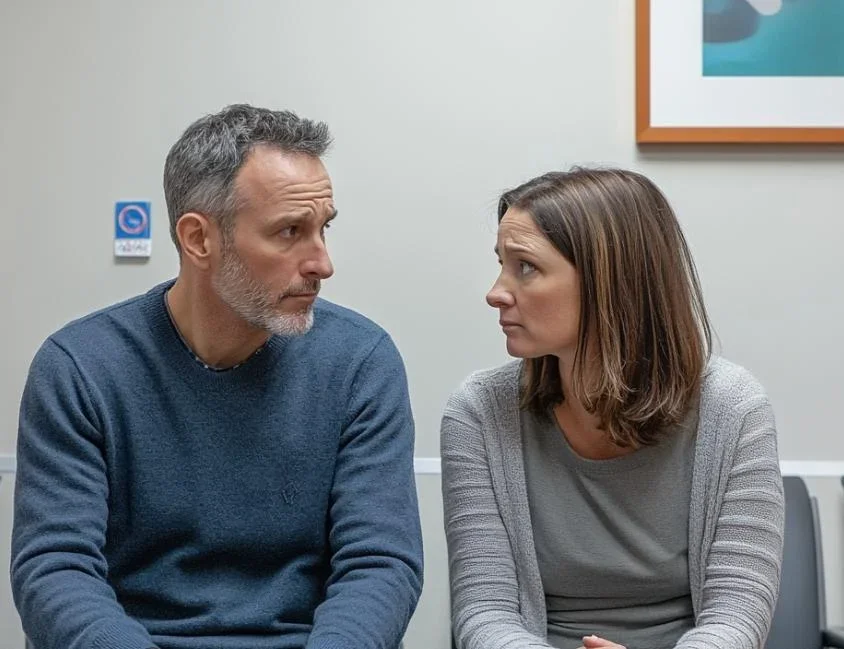
When Caregiving Leaves You on the Outside Looking In
There's something especially painful about caring for the person you love while feeling like an outsider in their experience.
You may accompany your partner to appointments, sit beside them during treatments, spend long days at the hospital and take on more at home. You're intimately involved in the practical realities of their illness. Emotionally, you may feel shut out.
You want to talk about what the doctors are saying and what you're both afraid of. You don't need your partner to stop hoping. You need room for hope and reality.
Instead, you may feel increasingly alone and unseen by the most important person in your world.
When Death Is No Longer Somewhere on the Horizon
Advanced illness changes your relationship with mortality. Something that once felt far away may suddenly feel close, and your partner may not be prepared to turn toward that.
But you're living inside it too.
You see the physical changes. You notice what they can no longer do. You may be quietly facing the possibility of losing the person you love while they keep talking about getting better.
Being shut out can feel deeply personal. But your partner's inability to let you in may have little to do with you. They may only be able to let you into the places they can enter themselves.
If acknowledging fear, decline, dependence or the possibility of death is more than they can tolerate right now, saying I'm fine or treatment is going to work may be how they get through the day.
You don't have to see things the same way. You can't choose how your partner faces their illness, but you can decide how much you'll participate in their need to turn away from what's happening. You can love them and stay hopeful without giving up your own sense of reality.
You're In This, Too
Caregiving is exhausting even when partners are emotionally connected. When you're carrying most of the fear and grief alone, the weight gets enormous.
You may feel angry, then guilty, because they're the one who's sick. You may keep trying to get your partner to acknowledge what's happening, or eventually stop trying, because every attempt leaves you more alone.
At some point, the question may need to shift from How do I get them to face this? to How do I take care of myself if they can't?
Where Lifespan Integration Comes In
This is where Lifespan Integration can help. LI works with more than your intellectual understanding of what's happening. If being alone with frightening realities, caregiving or holding everything together taps into something from earlier in your life, LI can help your nervous system process that history, so it isn't running the show right now.
The goal isn't to make you less frightened. This is frightening. The goal is more capacity: enough room to carry what's real without losing yourself in it, and without shutting your partner out to manage what feels too big to feel.
Your partner may need distance from the possibility that they're dying. You may need somewhere you're allowed to turn toward it, where you can be frightened, angry, exhausted, hopeful, devastated and honest.
Maybe what you've wanted all along isn't for your partner to promise everything will be okay. You just don't want to find out alone.
If you're caring for a seriously ill partner and feeling alone in what you're carrying, Life Transitions therapy can give you somewhere to bring all of it. Reach out when you're ready.
With care,
Jacquelyn
Written by Jacquelyn Baker
Space for Grief — Renton, WA
In-person & online therapy across Washington
